
Monthly Meetings
Our monthly meetings are held at the Athenaeum, Boundary Terraces, off Campground Road, Newlands on the last Thursday of every month, excluding December. The meetings start at 7pm. Entry is R10 for members and R20 for non-members. Our library is open from 5.50pm to 6.50pm. Apart from interesting talks, demonstrations and competitions, we offer refreshments, coffee and tea afterwards, where artists can chat and share ideas with one another.
Future meetings
24 September
29 October
26 November
Previous Meetings
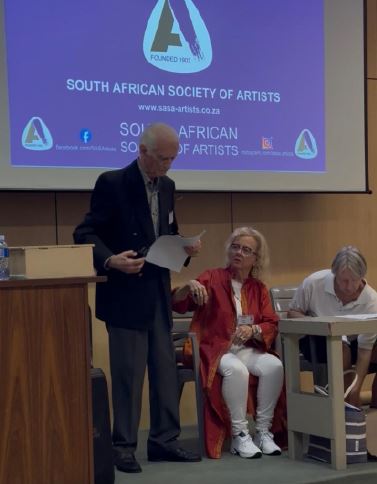
27 August 2026 -JURIED SELECTION FEEDBACK EVENING
An evening of insight and inspiration at the Members’ Meeting, held on 27 August at the Cape Town Athenaeum, offered members a wonderful opportunity to gain insight into their own work through the eyes of two experienced art professionals.
Richard Kilpert and René Snyman, both judges on the 2026 Juried Selection panel, joined the meeting to provide critiques on a selection of artworks entered into this year’s selection process. Members were also invited to bring along their own works for comment, creating an
engaging and informative evening of discussion. Richard shared his extensive knowledge of art styles and galleries, offering valuable perspective on how different approaches and artistic choices can influence the way a work is viewed.
René brought her strong technical knowledge to the discussion, providing thoughtful observations on technique, execution and the practical aspects of creating a successful artwork.
The critiques were honest, constructive and, above all, educational. Members had the opportunity not only to hear how their own work could be developed, but also to learn from the comments and observations made about the work of fellow artists. The evening provided plenty of food for thought and encouraged members to look at their own work with fresh eyes.
It was a valuable continuation of the 2026 Juried Selection process and an opportunity to reflect on the quality and diversity of work submitted this year. The artworks that successfully qualified through the 2026 Juried Selection will now have their moment in the spotlight at the
SASA 119th Annual Exhibition, taking place at Kirstenbosch from 6 October 2026. We look forward to seeing the selected works together and celebrating the talent and creativity of our members.
A sincere thank you to Richard and René for sharing their knowledge, experience and constructive insights with our members. Their contribution made for an enjoyable, stimulating and highly educational evening.


30 July 2026
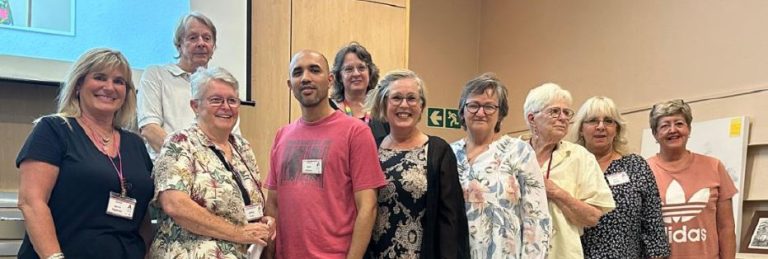
It has been a busy and rewarding month for SASA, and it was wonderful to see so many familiar faces, along with several new members, gathering at the Cape Town Athenaeum for our Landscape, Life and Still Life Competition on 30 July 2026. The evening was a celebration not only of artistic talent but also of the friendships and shared passion for art that make our society so special. Members enjoyed spending me together, exchanging ideas and encouragement, and admiring the impressive variety of artworks entered for judging. Judging by the standard of the entries, there is certainly no shortage of talent within SASA.
A sincere thank you to Art Savings Club, AB Canvas and Artland for generously sponsoring the prizes, and to Beth Lowe and Sue Paulsen for their thoughtful and constructive feedback on the entries. Congratulations to all our winners, and thank you to everyone who participated and helped make it such an enjoyable and inspiring evening.
The winners were:
LIFE
1st place Margaret Munro The Whimsical Villager
2nd place Anschen Friedrichs The Usual Gathering
3rd place Louise van Wyk Tango on the Promenade
LANDSCAPE
1st place Penny Steynor Welsh Coage
2nd place Bre Marn Boulders Beach
3rd place Mandy McKay Tranquility from Signal Hill
STILL LIFE
1st place Karen Burns In My Studio Today
2nd place Beth Lowe Pomegranate Tree
3rd place Penny Steynor Flowering Cyclamen


25 June 2026
We were delighted to have Elize Bezuidenhout as our guest speaker at our June members’ meeting. Her talk and demo gave a clear view of painting as a fully structured professional career rather than a sequence of isolated studio moments. What stood out is how much of her “painting process” happens before the brush touches canvas and how much of the reality of being an artist sits outside the studio in systems of planning, reference creation, and representation. Elize works exclusively through a single agent who represents multiple galleries. The agent
handles gallery placement, overseas sales, collectors and most client interaction, allowing her to focus on studio work. In return, Elize doesn’t sell privately or work with other galleries, or exhibit independently outside the arrangement. Everything flows through one channel and their business model flows form a position of mutual trust. Elize’s paintings are often sold before full completion based on existing demand, but
sometimes a complete work may also be rejected. There is a subtle feedback loop from the agent between commercial demand and subject matter. While she retains full control over execution, the agent can influence direction by encouraging themes that align with collectors’ interests. This does not override artistic choice, but it does shape the environment in which decisions are made.
Against this backdrop, discipline becomes central. She describes long working periods—often 12 to 14 hours during intensive phases—and a consistent focus on preparation as much as execution. The painting stage is only the final step in a much longer chain of decisions.
A major part of that chain is her preference for creating her own reference material. She avoids found imagery, instead constructing her own photographic setups to control lighting, composition, and intent. This can involve spending an entire day working through a single subject,
adjusting light, shadow, and positioning until the desired visual conditions are achieved. She prefers strong directional light and high contrast because it creates clearer structure for painting.
Once enough reference is gathered, she moves into simple compositional testing by arranging images digitally at canvas scale. This allows her to resolve structural and compositional issues before paint is applied. Her principle is pragmatic: it is cheaper and more efficient to solve
compositional problems early than on canvas. Her stance on photographic reference is uncompromising. Literal copying is not the goal—if that were the case, a photograph would suffice. Instead, Elize paints an interpretation, suggesting texture rather than copying, subtly amplifying temperature relationships rather than exact matching, and brushwork is used to imply structure rather than reproduce detail. She works primarily in warm–cool relationships and introduces complementary colours subtly to create vibration rather than contrast for its own sake.
Her brushwork follows form rather than detail. Strokes describe structure—such as the direction of petals—rather than building surface imitation. Mistakes are not immediately erased but often painted over or incorporated, treated as part of the evolving surface rather
than disruptions. Her technical workflow remains consistent: drawing, underpainting, blocking in major colour areas and only then refining the image. In the early stages she prioritises structure. On larger works, measured reference points and proportional divisions help maintain accuracy. Elize’s singular style seems to come to naturally to her. She has developed a personal visual language, seemingly unintentionally.
Her paintings are a visual portrayal of what she exudes, inner peace and quiet confidence. Elize’s work ethic is something to be admired and aspired to. Every brushstroke is applied with care. There is intense concentration, building up the image with multiple layers and immense
patience and dedication. Elize is quite particular about the materials she uses, fine, good quality canvas that is professionally stretched canvas and the best paint. She loves the colours in the Michael Harding set pictured below, and in Elize’s hands those colours absolutely sing.
But there is another very important arrow in Elize’s quiver, her husband Frik. She credits him as the most supportive spouse an artist could want. While he enjoys retirement, it allows him to take care of all the little things artists forget about, like shopping for meals, cooking and other chores and errands. On behalf of Elize’s fans, Frik, we salute you.
Elize offers workshops all over South Africa, where Frik also plays a pivotal supportive role.
Thank you, Elize, for taking time out of your schedule to come and share your process with us. We came away awed and inspired.


28 May 2026
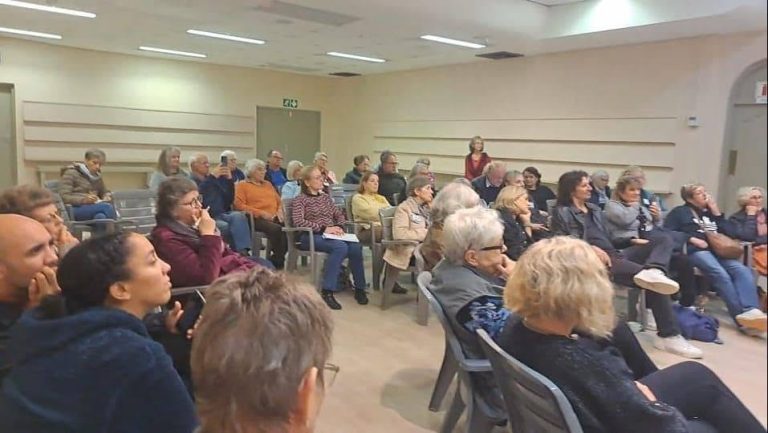
An Extraordinary General Meeting was held on Thursday evening before the members’ meeting to vote on the adoption of the amended constitution of SASA. The president briefly explained the changes to the constitution and the new constitution was voted in unanimously.
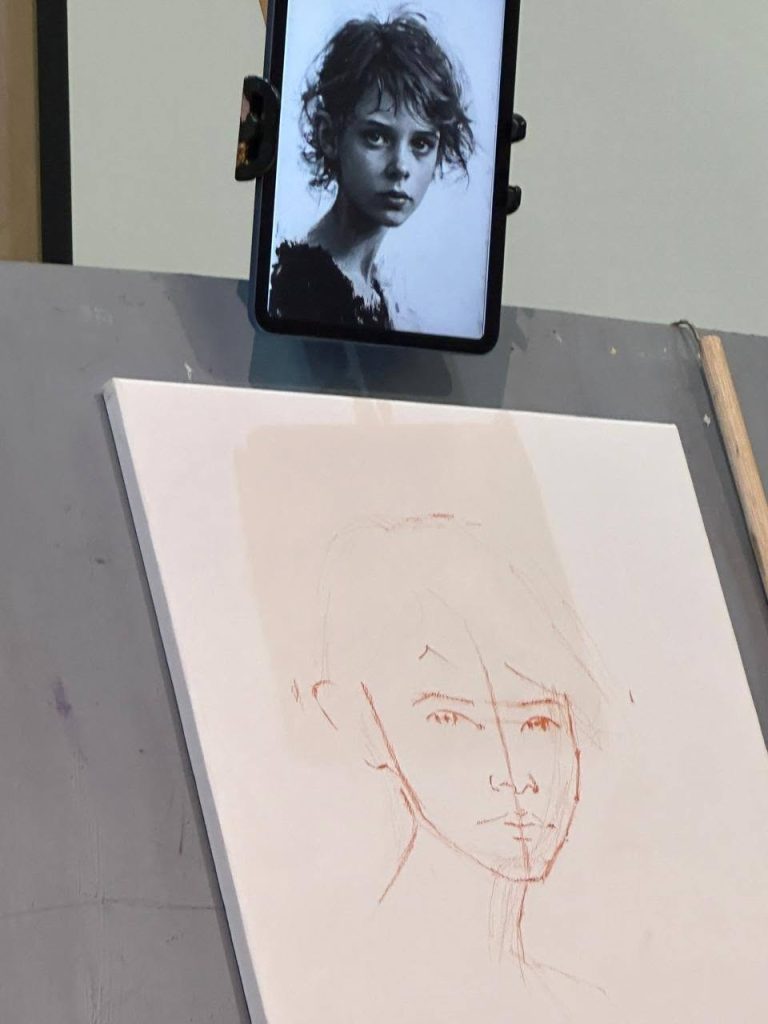
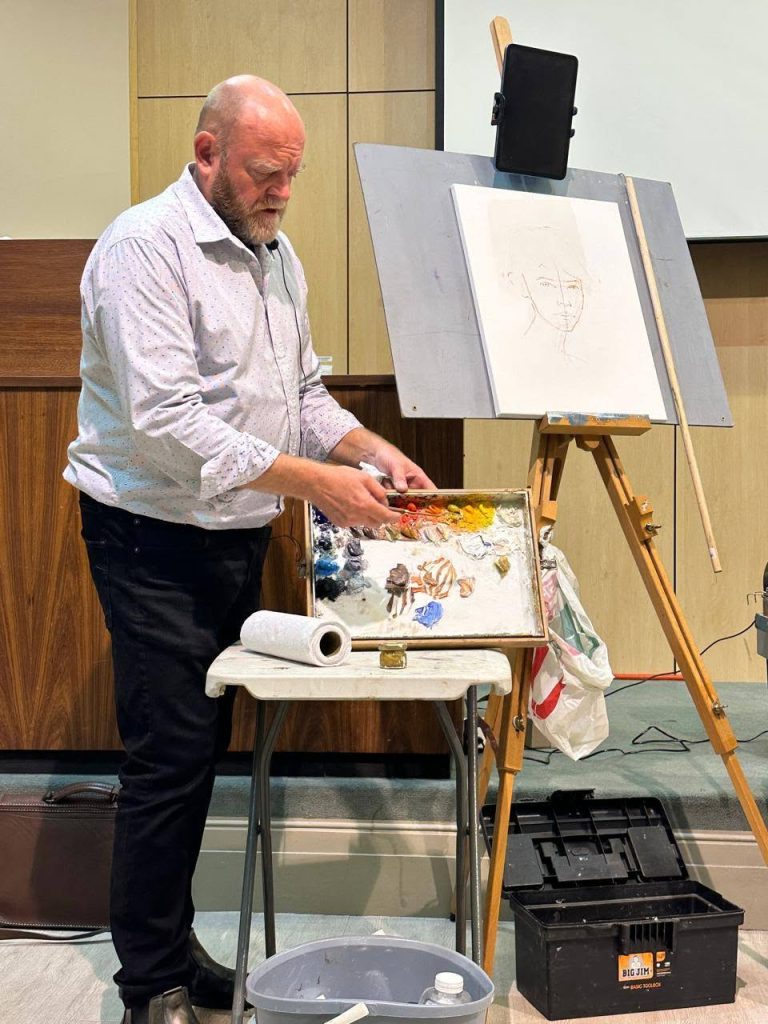
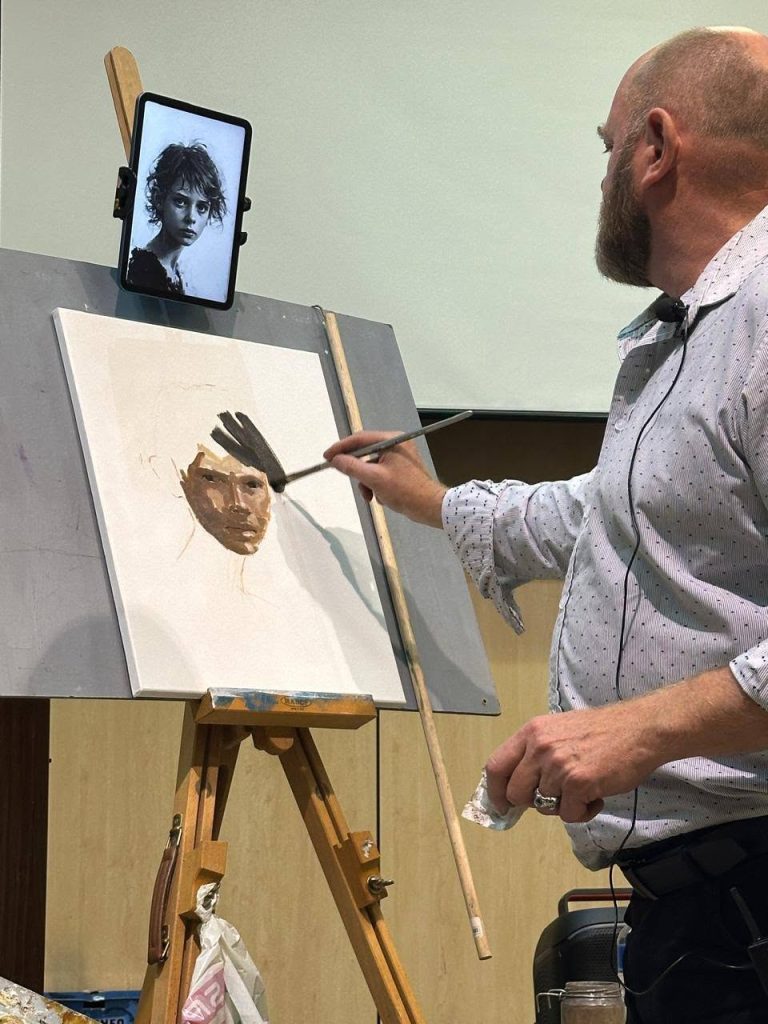
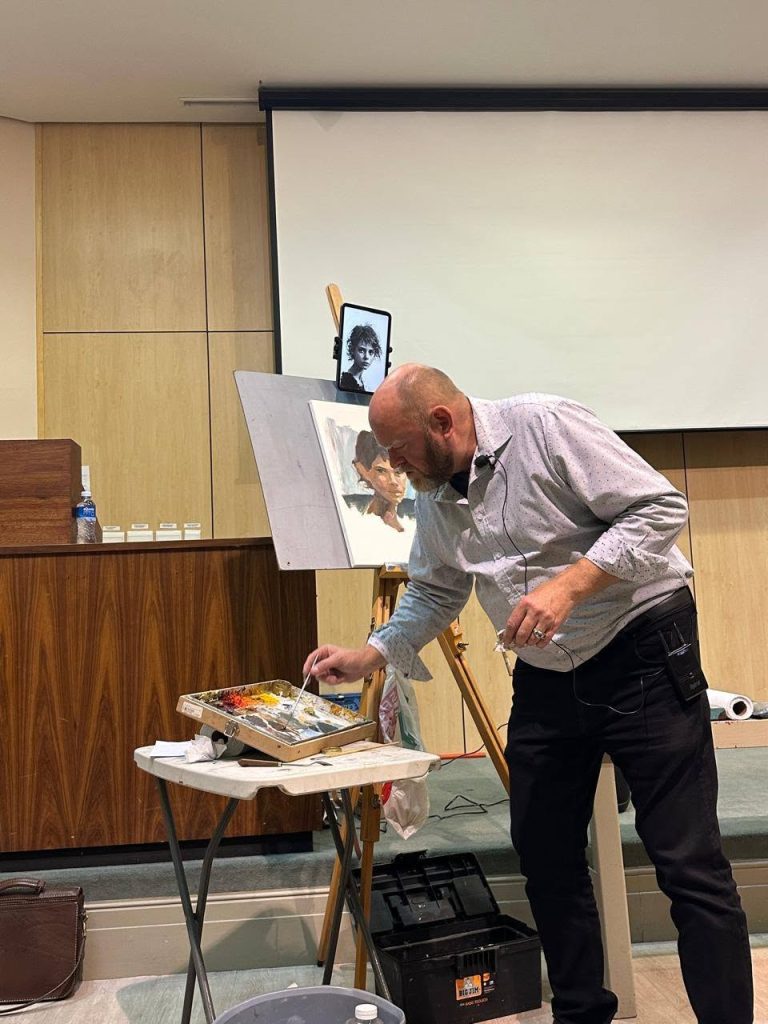
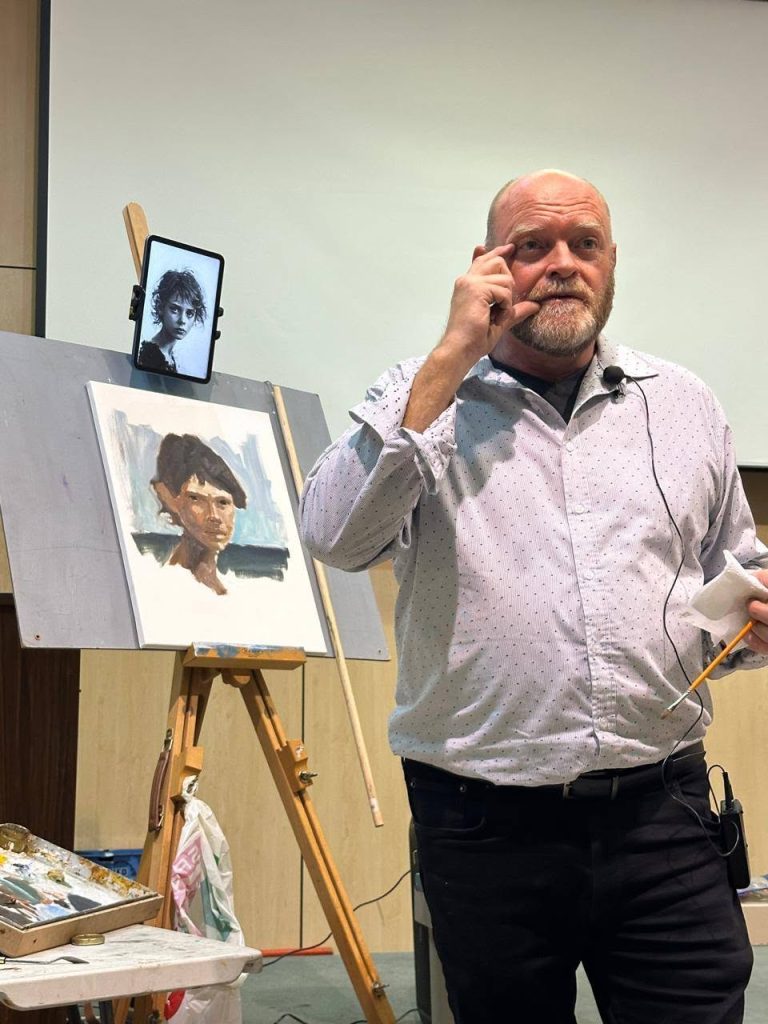
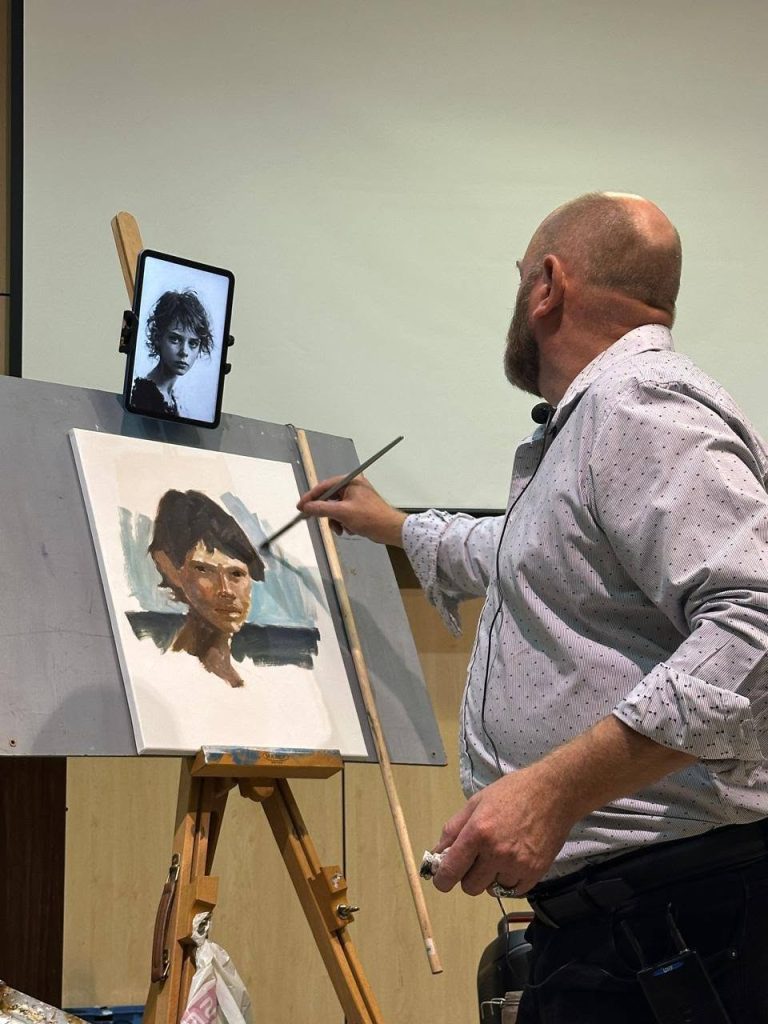
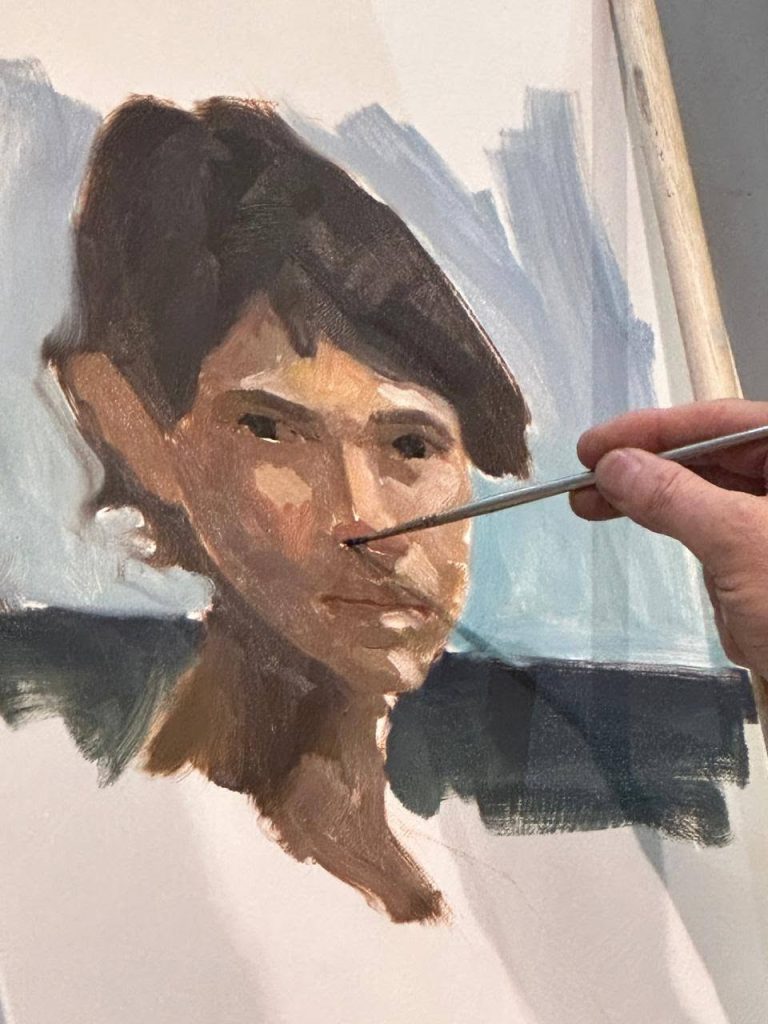
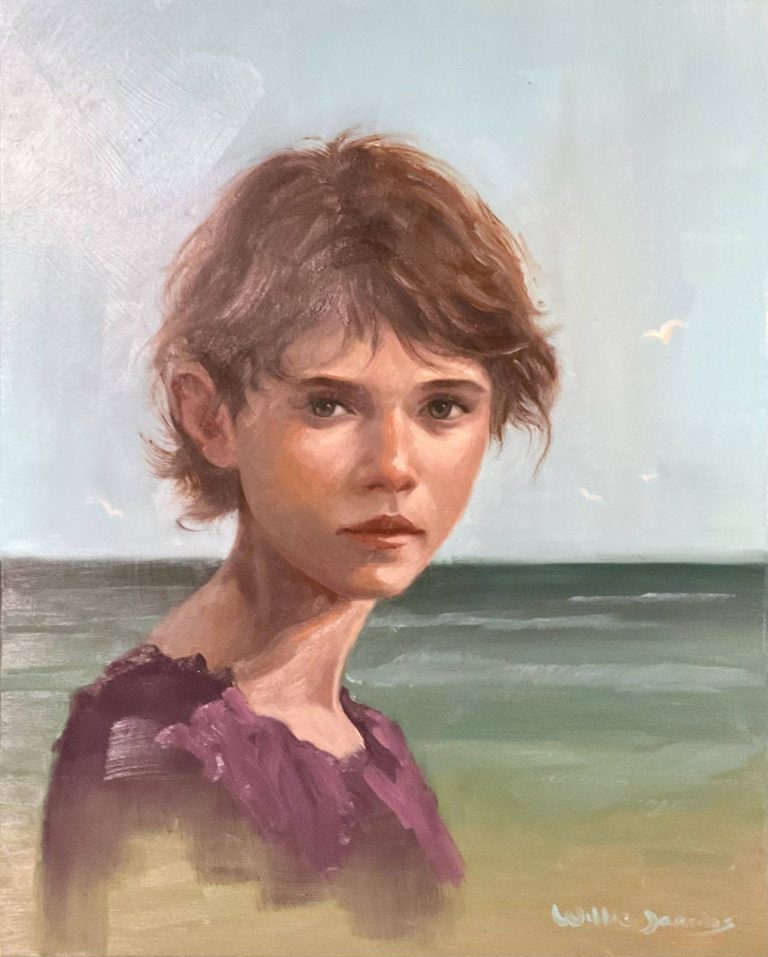
Willie Jacobs was our speaker at the May members’ meeting. Impressively, Willie did a demo of a portrait in oil whilst casually chatting to us and answering questions.
Willie began the demonstration by describing his flexible approach to portrait painting. Sometimes he establishes proportions first, while at other times he starts with a particular feature and builds outward. He cautioned against focusing too narrowly on details too early, recounting a portrait commission in which he completed the painting only to realise, after delivering it, that he had forgotten to paint the children’s ears!
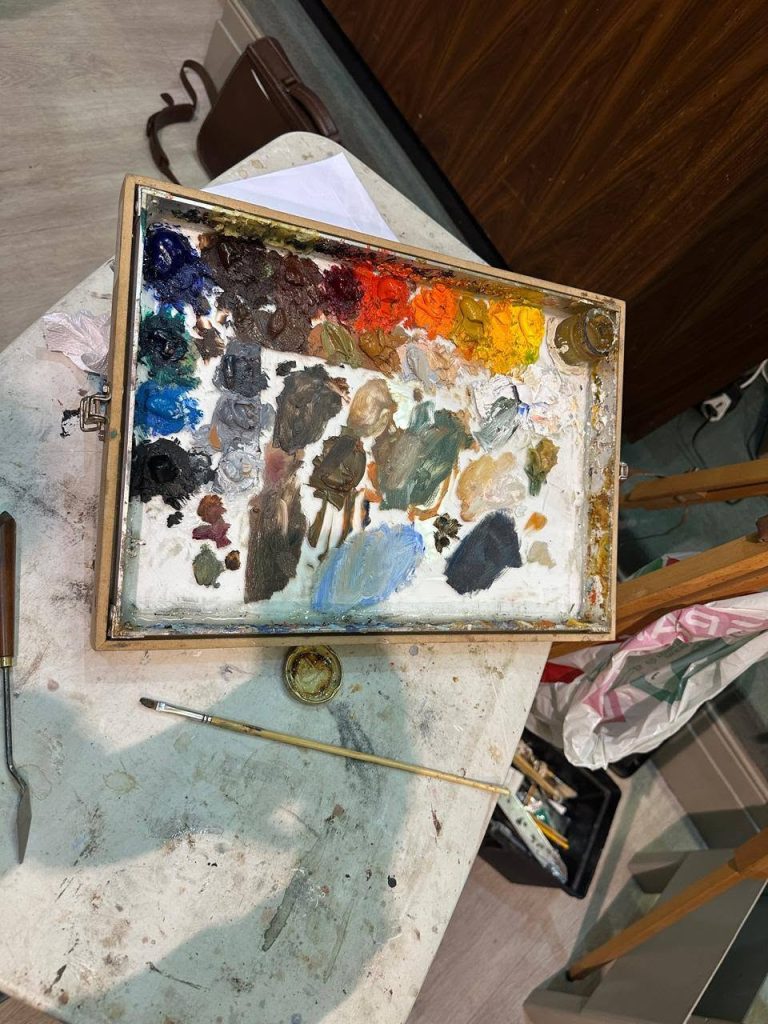
He then explained his method for mixing skin tones using red, yellow, and blue as foundational colours, with titanium white added to create opacity and form. He emphasized that colour is always relative, and that surrounding tones, including the background, influence how light or dark the subject appears.
Building a palette of warm, cool, light, and dark variations, Willie demonstrated how subtle shifts in colour temperature contribute to realism. Rather than simply copying colour, he focuses on understanding how light interacts with the planes of the face. He described the face as a series of value zones and planes, each responding differently to light and requiring careful observation of warm and cool transitions.
Using a black-and-white reference image, he reinforced the importance of value over colour. As he gradually developed shadows, highlights, hair, and background elements, the perceived brightness of the face changed, illustrating how surrounding tones affect visual perception.
A recurring theme throughout the demonstration was the importance of character. Willie believes that successful portraiture requires more than an accurate likeness; it demands an understanding of the subject’s story and personality. He encourages artists to connect emotionally with their subjects and to ensure harmony of expression across the face, particularly between the eyes and mouth.
He also stressed the importance of edges and transitions. Not every area should be rendered with equal sharpness; lost and found edges help direct the viewer’s attention and create a greater sense of depth. Likewise, subtle temperature shifts within shadows often contribute more to the illusion of form than simply making an area lighter or darker.
Finally, Willie highlighted the value of patience and restraint. Rather than resolving every detail immediately, he allows the portrait to emerge gradually through careful observation and small adjustments. He often steps back to assess relationships within the painting, believing that patience is essential to maintaining the balance between structure, light, and character. He also avoids excessive use of painting medium, preferring to allow the work to dry evenly before applying a final varnish to unify the surface.

30 April 2026
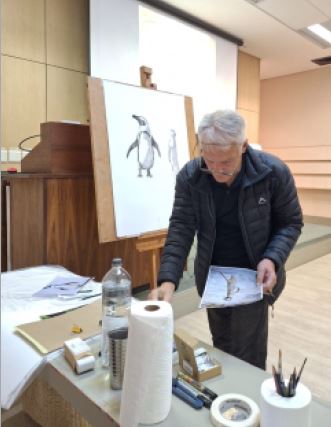
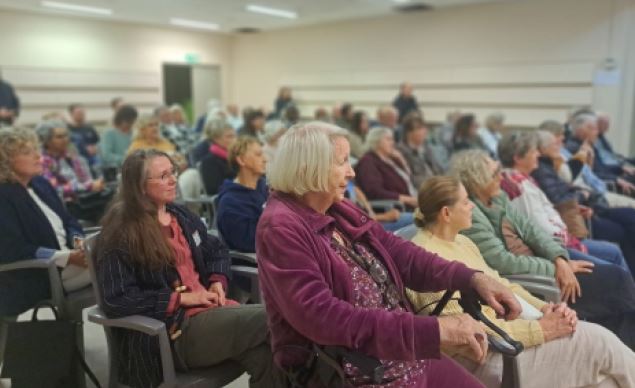
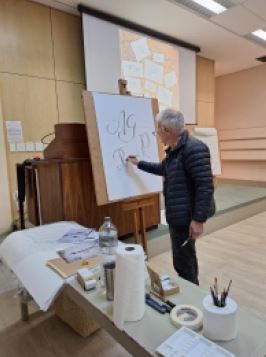
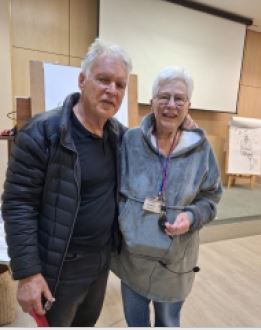
Award-winning wildlife artist Peter Gray visited the society on Thursday evening to speak about his art and in particular, collaborations. Peter
took the members on an art journey through his life. Peter was introduced to art when his father taught him to engrave copper plate and seals
(not the sea life but the now almost lost art of engraving a relief that will transfer into wax to make a seal) because, as Peter jokingly remarked,
he had no hope for his son’s academic success.
Born in Zimbabwe and with a passion for wildlife, in particular birds, Peter sold his first artwork at 12 years old. He then finished his schooling in
fine arts and furthered his studies in jewellery design and engraving. He told us one of his important lessons as an artist happened while he
was a young child in his father’s workshop. A man, let’s call him Harry, came in wanting a quick engraving done on his ring. Ten minutes later, the ring had a superb engraving done.
Harry was over the moon, until it came to pricing. Harry felt the price of was too high. To this, Peter’s father then took the ring, filed off his engraving, and offered Harry the opportunity to engrave it himself. Harry left very unhappy, and maybe a little upset. Peter’s father then asked Peter, “How long did it take me to do that engraving?” “About ten minutes,” was Peter’s response. “No,” replied his father, “actually it took me
thirty years of experience and skill to produce that in ten minutes.” Pricing, therefore, says Peter, is not always about comparing art to what looks similar, but about the collaboration, effort, and journey to produce that artwork.
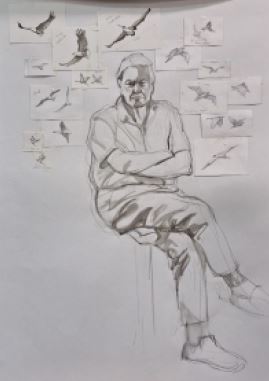
Collaboration between artists is a themes that drive Peter. An example of this is his initiative to create an artwork in collaboration with SASA to celebrate Sir David Attenborough’s 100th birthday on the 8th of May. The concept is an image of David surrounded by birds of various sizes, drawn by the SASA members and Peter.
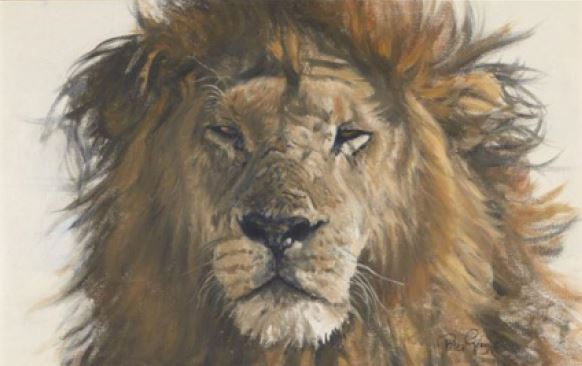
Peter is a wildlife painter, and his love for birds and animals really comes through in his artwork. His painting of King took approximately three weeks to complete, but Peter advised that he was not working on one painting alone, but had a few projects on the go. This helped to keep him inspired, as he would return to each artwork fresh and not become drained. Taking commissions is also a form of collaboration between the artist and the client. Peter told an anecdote of a family portrait, father, mother and three boys, he was asked to paint. Peter spent some time with the family to get to know their characters, especially the three boys. Although Peter also paints exquisite portraits, he ended up painting this family as a family of lions, subtly and expertly portraying the characters of each person in the posture of the cats. His bravery paid off, with the client recognising himself, his wife and children in a beautifully painted portrait of lions.
On Thursday, we got to see a slideshow of Peter’s work, but you can view more –Portfolio 4 Columns Peter Gray. When viewing these works, keep in mind that Peter works on the main character first before proceeding to the background. The subject is the inspiration, and working on
that keeps him inspired for longer. He recommends you don’t use inexpensive materials as this may yield an inferior result, although he may not always follow his own advice. He avoids varnishing his artwork as it hinders any later adjustments. Peter also encourages us not to keep our work to ourselves, but to market it. Social media is one platform and, of course, SASA’s exhibitions is another. As artists, we communicate a our own messages and emotion through our art.
26 March 2026
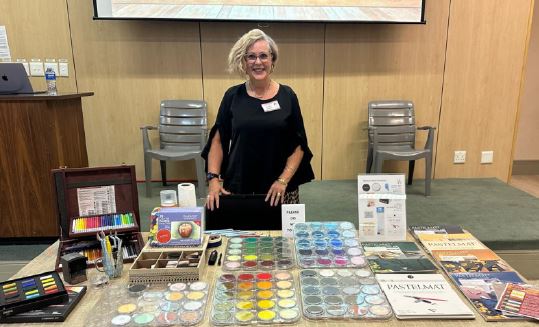
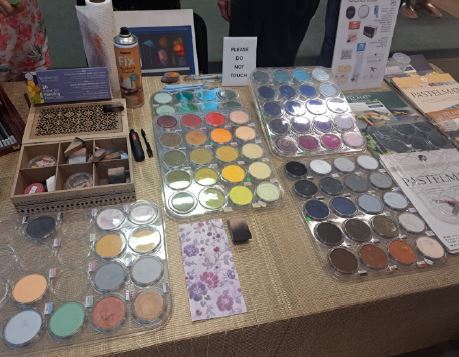
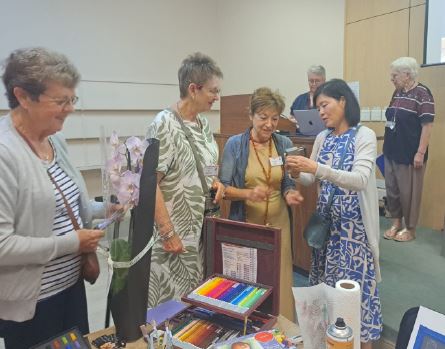
being gifted her first set. From that moment, there was no looking back. This professional-quality medium behaves like fluid paint and can be mixed like oils or acrylics, while maintaining an ultra-so texture that allows for great creative freedom. Although there originally 80 colours available, 53 new colours became available when Golden took over the brand. Artists can also purchase a set of pure colours along with black and white to mix a wide range of tones. Anschen suggests that, because PanPastel can be expensive, beginners should start with a basic set: black and white colours, a Soft tool, a sponge, and pastel paper. Additionally, a putty eraser, pastelmat paper, and some paper towel are useful. Typing paper only recommended for testing / mixing, not painting. There are four main So tools: a straight edge, a wedge, an oval, and a round tool. Anschen recommends the oval tool, as it is the most versatile in her view. The sponge tips can be used on either side, and as they wear down, they can still be kept, as the worn texture creates interesting patterns. The sponges can be washed, but simply wiping them on
paper towel is usually sufficient to remove pigment. PanPastel colours are sold individually and in sets. It is recommended to look out for specials, as sets are often more cost-effective than buying individual colours. The colours are specially formulated with a binding agent that holds the powder together. Care should be taken not to drop them, as this can break the binding and affect their usability. Colours can be mixed in two ways: either by transferring pigment onto a separate sponge and blending there, or by picking up multiple colours on one Soft tool and mixing them directly on the pastel surface. Pastelmat paper is essential, as they are specially designed to hold the pigment and allow for multiple layers to be applied. While pastelmat can be washed, they will not return to their original state, though enough pigment
can be removed to create a new image.
Pastelmat is available in various colours, which can enhance artistic effects. When working with PanPastel, Anschen recommends first outlining
the image and marking the dark, mid, and light tones. From there, the artist can work either from dark to light or light to dark, blocking in the tones. The process may initially look unrefined, but trusting the process allows the image to develop. Blending edges helps create smooth transitions, but overblending should be avoided. Afterward, the artwork can be evaluated and
refined with additional layers. Fixative can be used, but Anschen believes it is not necessary. Always test if you are going to use fixative. Proper framing under glass is sufficient, provided the artwork remains upright. If laid flat, some pigment may loosen, although this has not been
an issue in her experience. A final note: Anschen once attended a party and, in need of blue makeup, used PanPastel instead.
Three days later, she was still wearing striking blue colour. This should be attempted at one’s own risk.
Anschen is available for workshops.
26 February 2026
This was then followed through with the AGM. Mike Forrester
presented a comprehensive financial report. Mike addressed various items on the financial statement to the members’ satisfaction.
Irene then presented the President’s Report of the society’s activities over the past year, bringing back a lot of fond memories; reminders of all the members’ meetings, activities and exhibitions. Lastly, we said farewell to our outgoing President, Irene Oxley as well as our outgoing Exhibitions Coordinator, Raine Parsons. They leave some large shoes to fill. Council members that were voted in are Liz Pearson as the
President, Audrey Innes as Vice President, Sonja Frenz, Anschen Friedrichs and Dalene Smit, who join Louise, Mike, Jared, Sandy
and Avril.
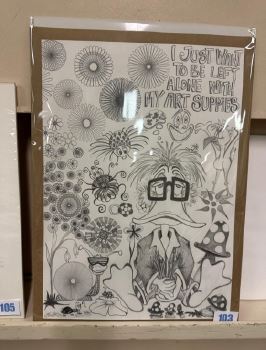
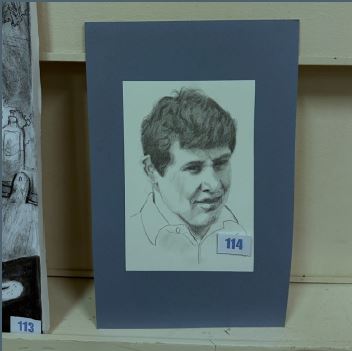
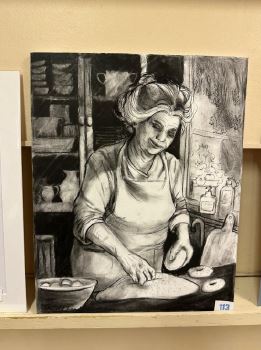
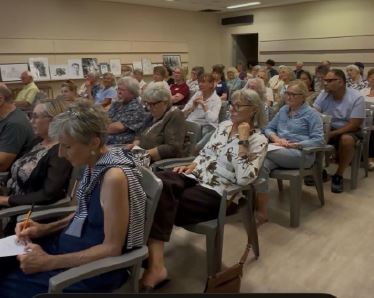
The drawing and sketchbook competition gave our members another opportunity to display their work and be judged by their peers on the
night. All the artwork brought to the meeting were exhibited in the hall and before the AGM the members had the opportunity to peruse the
drawings and sketchbooks.
After the AGM, the competition officially began and everyone had the chance to vote for their top three favourite works in both categories. The
competition also provided lots of thought and inspiration for all. On the on side there were the sketchbooks and we were treated t a real feast of wonderful sketches – from still life to people to places visited and recorded in a visual diary format. Along the other side were the drawings.
Incredible artwork that, in some cases, must have taken hours and hours of work. Drawings like these show what can be achieved with a
simple pencil or charcoal stick.
After the voting, tea, snacks and lot of chit chat with other members before going back to the hall for the awarding of the top honours.
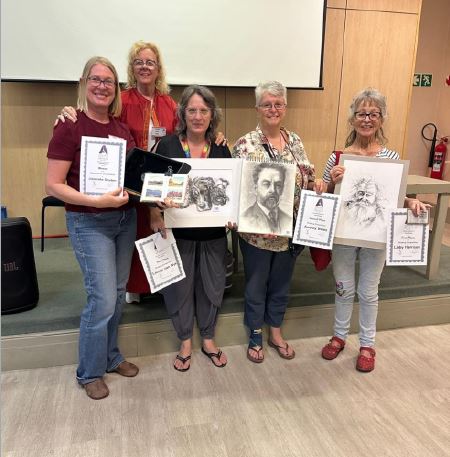
Congratulations to the winners of the drawing competition. In 3rd place was Louise van Wyk and her drawing of her special dog, in 2nd place was Audrey Innes and her drawing of John Singer Sargent and 1st prize went to Libby Harrison and her character-filled portrait of an elderly man. The sketchbook section was won by Johanneke Strydom for her landscapes illustrated in her pocket sized sketchbook.
Well done to you all!
29 January 2026


27 November 2025


30 October 2025

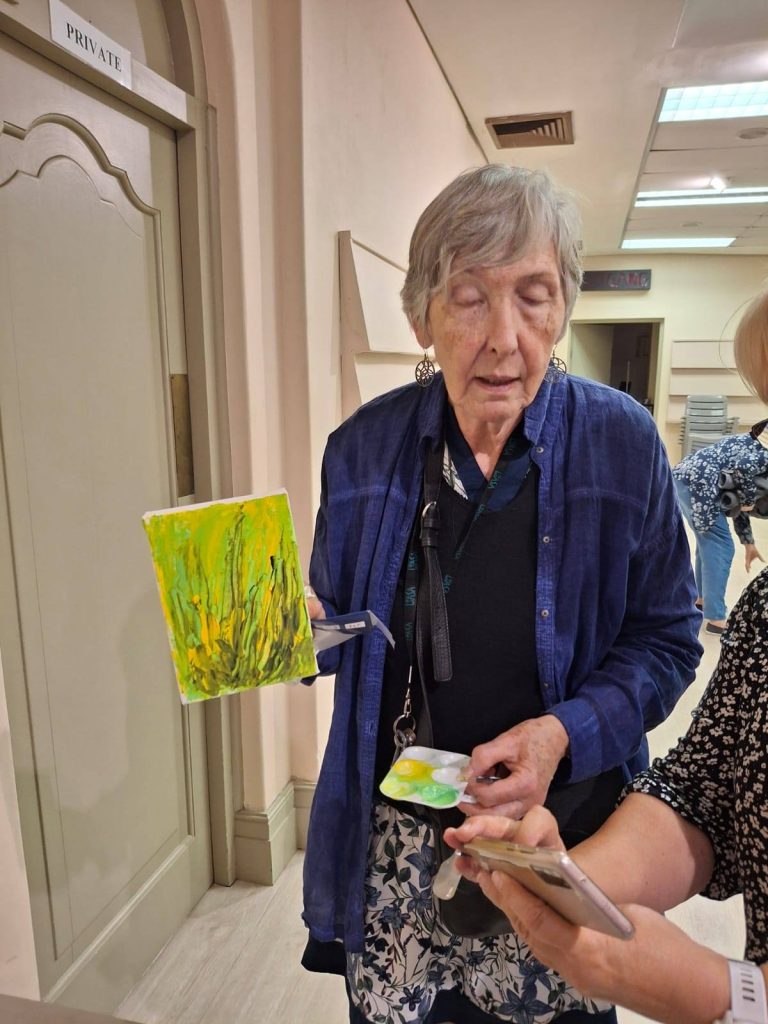
25 September 2025


Copyright © 2026 South African Society of Artists | All Rights Reserved | MCOR Design